
CURRENT ISSUE - January, 2010
FEATURE STORY
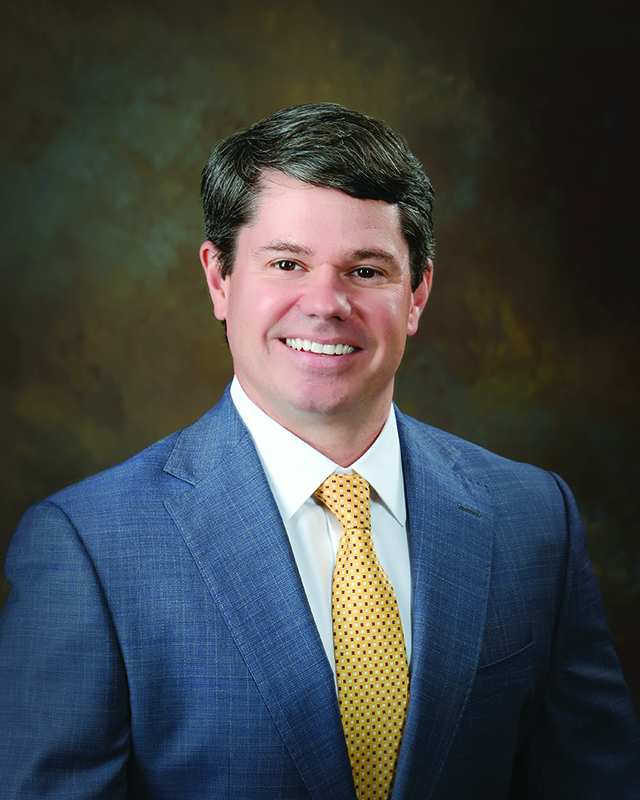
Mayor Carolyn McAdams
Brings personal dedication to Greenwood, corporate skills to job
By Lynn Lofton
DBJ Contributing Writer

When Carolyn McAdams threw her hat into the race for mayor of Greenwood, it was the first political campaign she had ever waged. It was a tough race but the feisty lady won handily over five opponents, including the incumbent, and took office last July.
“If someone had told me even a year ago I would be mayor, I would have said ‘yeah and you’re going to be president of the United States.’ People asked me to run,” she recalls. “I gave it serious consideration and decided I could do the job because I can budget and organize.”
The campaign was difficult and more detailed than she had imagined but she hasn’t looked back. Having worked in the corporate and private world, McAdams admits she was a little caught off guard by the different atmosphere of public service.
“I have a lot to learn but I’m getting comfortable with the job and loving it,” she says. “Any new job is overwhelming at first. In this one there’s no one to teach and direct like there is in the corporate world. You can’t hide so you just deal with it.”
Her love for the city she’s called home since third grade is evident. She states unequivocally that anything that puts Greenwood ahead is her goal as mayor.
“I have a vision for Greenwood as an outstanding place to come and live. It’s great for retirees and families raising children. It’s still a small town, safe, has history, has colleges nearby and proximity to large cities,” she says. “I’m putting a focus on bonding as one community. I want this to be a place where our children will want to stay and live.”
Allan Hammons, owner of Hammons & Associates advertising agency, has known McAdams since third grade and they graduated from Greenwood High School in the class of 1966.
“I was pleasantly surprised when she announced that she would run for mayor,” he says. “I told her that in many ways it’s a thankless task and takes the patience of Job. It didn’t deter her. There’s no doubt she’s dedicated to Greenwood and has a passion for the community. People should run for public office for the right reasons and she did.”
The new mayor was born in Houston, Miss., and moved with her parents, Hiller and Betty Herrington, to Greenwood where her Dad was a district maintenance manager with the State Highway Department. She has two brothers and one sister. Throughout high school and in classes at Mississippi University for Women and Mississippi Delta Junior College she liked working with numbers and seeing things balance.
In 1968, she married Mike McAdams, a U.S. Air Force pilot in the Vietnam War. During his military career, the couple lived away from Mississippi for ten years, including two years in the Philippines.
“Those years broadened my horizon. I saw poverty stricken areas like we can’t imagine here and learned that the grass is not always greener,” she recounts. “The Air Force also influenced me to be color blind and took me out of the racial issues of the 1960s.”
She and Mike are the parents of two daughters, Lyn McCool of Greenwood, and Stacy Montegut of Memphis, and the proud grandparents of seven grandchildren.
“I love spending time with my family. We take the whole, huge family to the beach every summer,” she says. “I also like walking and being outside when possible, going to movies and just experiencing life and being around lots of people. I have some lifelong friends.”
Mary Rose Carter is a friend of about 25 years. The personal friends had children in the same grade in school and were involved in school activities together too.
“I encouraged her to run for mayor and was very pleased when she did,” Carter, a professional photographer, says. “She is a real community minded person. She has so much common sense, is impeccably honest and trustworthy, and just incredibly suited to be mayor.”
McAdams, 62, has had some great jobs that she feels prepared her to be mayor. Her first job was with Greenwood Utilities where Director Charles Matthews became an important influence.
“He played a huge part in developing my work ethic and helping me learn more,” she says. “He took me under his wing and explained things to me. I didn’t put myself in one category and learned multi-tasking.”
Every job in her 30-year career has dealt with bookkeeping and budgeting. She was bookkeeper for a local law firm, Section Eight coordinator for the Greenwood Housing Authority and manager of finance for privately-owned Delta Correctional Facility. She had no political involvement throughout those years.
She hopes to see citizens working together as one city and one county to move the area forward. “We’ve made headway on that and are breaking barriers,” she says. “This philosophy is being accepted but we still have work to do. The only agenda I have is to make Greenwood the best it can be.”
The city held a series of public meetings to learn what citizens want in the development of a 30-year comprehensive plan.
“People are always our best asset. They’re warm and hospitable,” McAdams says. “We also have outstanding tourism, a great Main Street program and a historic downtown area. People believe in us.”
However, the new mayor recognizes current challenges for the city. The last census put the population at 18,476 and she feels the 2010 census will reflect a decline.
Sales tax collections also declined eight to ten percent last year in the months leading to December.
“We’re learning to cope and do as much as possible with less money,” she says. “We’re using good, common sense and have had no layoffs of city personnel. We’re moving. It might be at a snail’s pace but things are happening.”
She lists several new businesses opening and some expansions that are encouraging. The downtown revitalization continues with new sidewalks and installation of historical lights. Street repairs are being made and the city parking lot is being redone to make it flow better with the historical district.
“Better education is always needed,” McAdams says. “Safety has improved as we’ve put more police officers on duty. And we are working closely with economic developers to find opportunities to bring in more industry. We’re helping Milwaukee Tools with their expansion so more employees can be hired.”
Being mayor is not for the faint of heart, but McAdams is enthusiastic and energetic, reminding any naysayers that dynamite comes in small packages.
“There are so many things to do after hours that are just part of the job,” she says. “I try to do everything that’s asked of me.” DBJ
From the Publisher
What will 2010 bring to Delta businesses?
BY SCOTT COOPWOOD
DBJ Publisher
This is a question we at the DBJ have been asking around our office for the past couple of months.
By all accounts, 2009 was a tough year for our region of Mississippi. I have often joked that things are always tough here in the Mississippi Delta and that in some form or fashion, we seem to always be in the middle of a depression. Well, about mid-year, when the national economy made a turn for the worse, so did the Mississippi Delta. This time around it was very real and hit pretty close to home.
During the month of December, I did something I never seem to have the time to do anymore. I made a point of riding around the Delta, visited several civic clubs and dropped in unannounced on a few of our DBJ friends—some of whom I have not seen in a couple of years. I did this in order to gain some insight into what the current overall business climate is in the Delta. I can certainly pull this information from a variety of web sites and state data. However, I wanted to get out and literally look into the eyes of some of our business leaders and hear what they had to say.
Fourteen people and six civic clubs later that stretched from Tunica to Yazoo City and even over to Vicksburg, I still did not have a clear answer. The response was a mixed bag.
“Actually, we are having a better year this year than we had last year,” one business owner in the north Delta told me.
“We are in trouble,” said another business owner in the central Delta. “It took four generations to build our business and now that I have finally taken over, I’m going to be the generation that will lose it.” I tossed and turned one night after I heard this comment.
The comments continued and were all over the map. Many said that they have no plans to try to expand or increase their business in 2010, that all they want to do is just “hold on.” Another word that kept popping up was “survive” in 2010.
But, ever the optimist in the group, I think that the Delta’s business climate will improve in 2010. One thing for sure is that we must face this fire in order for the Delta to move forward in 2010 and beyond: we have to start thinking in a creative way how we can grow our businesses here. I think it is safe to say that Toyota, Nissan, or Apple are never going to build a plant here in the Mississippi Delta. We need to get off of that bandwagon and focus on what is possible. We should identify what our region can do to better our economic picture here.
The state is in the process of putting a plan together examining something they are calling the “creative economy.” From my very limited briefing on this plan, Mississippi’s Creative Economy looks at how much revenue has been and can be brought in through our music and the arts—our cultural and tourism-related assets.
To think that the state is even looking at something like this is very exciting because when you compare the Delta to the remainder of Mississippi, I think it is safe to say that we have the lion’s share of our state’s cultural offerings.
Blues music? Born right here in the Delta. Face the fact that embracing and promoting our culture in general could be our way up from the bottom.
So, we must open up our minds and think outside of the traditional economic development box in order for the Mississippi Delta to move forward. Let’s be open to new leadership and new ideas. Let’s reinvent ourselves. It is time for change here in our region. In 2010, the talk must begin on what the long-term strategic plan should be for our region of Mississippi.
In closing, I am happy to announce and welcome our new editor of the Delta Business Journal, Shana O’Malley. In our 11 years of publishing the Delta Business Journal, Shana becomes our third editor.
Shana comes to the Mississippi Delta from her hometown of Sagamore Hills, Ohio. She is a 2009 graduate of E.W. Scripps School of Journalism at Ohio University. During her time at OU, Shana interned at Fox News in Washington, D.C. where she spent the summer of 2008 interviewing congressmen on Capitol Hill and helping cover the 2008 presidential campaigns. For the last three years, Shana also worked as a reporter for WATH/WXTQ, a commercial radio station in Athens, Ohio, where she covered a variety of local and state news. Shana now resides in Cleveland.
“I love the warm and welcoming feeling of the Delta and I am excited to serve the wonderful people here in my new position,” Shana says. “As the new editor of the Delta Business Journal, my goal is to continue to uphold the quality content of the DBJ while leading the publication to new heights.”
From all of us here at the Delta Business Journal, we wish you and your family a prosperous 2010. DBJ
Guest Commentary
Smart transmission policy keeps the lights on
By Steven Carter
We’ve all experienced power blackouts as a result of storms blowing down power lines or animals burrowing in a transformer and shorting it out. Usually, utility workers quickly get electricity flowing again. But in recent years some parts of the country saw power failures of greater magnitude as a result of electrical grid failure.
The Northeast blackout of 2003 left 40 million Americans in eight states (plus 10 million Canadians) without electricity and cost an estimated $6 billion. In 2006 the California grid failed during 100-degree temperatures creating a summer of rolling blackouts across the state. California’s already overtaxed grid was ill-equipped to handle millions of homes and businesses running their air conditioners.
A summer with 100-degree days is far from unusual in Mississippi. So what’s the difference in our power grid and that of California or New York, and what should we do to make sure we don’t suffer the same failures?
Advance Mississippi, an energy policy advocacy group led by former TVA Chairman Glenn McCullough, Jr. recently released an issue brief to consider these questions entitled “Delivering Power: An Overview of Mississippi’s Electric Transmission System” available at AdvanceMississippi.com.
While smart energy policy that leads to the increased generation of affordable and reliable electricity is critical to our state’s economic development and improved quality of life, we need infrastructure to move the electricity from power plants to homes and businesses.
The U.S. Department of Energy estimates that demand for electricity will increase by 26 percent between 2007 and 2030. That’s the equivalent of adding four states the size of California with equivalent power demand to the nation’s grid. Currently, there are over 200,000 miles of high-voltage transmission lines nationwide which deliver electricity from power plants to cities and other high-demand areas.
The North American Electric Reliability Corporation states that the U.S. will need more than 15,000 miles of additional transmission lines over the next decade. Furthermore, the Southeastern Electric Reliability Corporation (SERC), which oversees the reliability and infrastructure in most of Mississippi, reports several hundred more miles of transmission line will be needed in the region by 2017.
We must ensure that we continue to invest in the two sides of the coin, generation and transmission, yet we must make sure these investments are sensible for our state so Mississippi ratepayers aren’t paying for energy projects that they won’t benefit from.
In the past several years, we have seen natural gas prices fluctuate as much as 120 percent. With around 42 percent of Mississippi’s electric power coming from natural gas, these fluctuations mean higher electricity prices for Mississippi homes and businesses. We are fortunate that right now natural gas prices are low and predicted to remain so for awhile. But projects like the Kemper lignite plant and the potential for a new nuclear reactor at Grand Gulf would serve to diversify our state’s electricity portfolio, which will have long-term benefits for the state by keeping our electricity rates stable with additional reliable, clean and efficient base load power.
With these projects, coupled with smart transmission investment, Mississippi can ensure that we avoid the unfortunate blackouts that have damaged the economies in the Northeast and California.
There are many different views on energy policy, yet one thing is for sure: keeping all of our options on the table and making the right choices for Mississippians today will pay off for our economy in the long run. DBJ
(Steven Carter is Program Coordinator for Advance Mississippi, www.AdvanceMississippi.com.)
Delta Council thanks Thompson for supporting disaster measure
Chairman helps move assistance to producers
Delta Council says it is pleased that Congressman Bennie Thompson has signaled his strong support for recent legislation introduced in the U.S. Congress that holds the potential of delivering critical assistance to producers that suffered yield and quality losses in 2009’s unprecedented barrage of heavy rain during harvest season.
“We appreciate the strong support of Chairman Bennie Thompson,” said Delta Council President Travis Satterfield of Benoit. “The Chairman has always stepped up to support agriculture in the Second District, and he recognizes that this year was an unprecedented disaster that threatens the financial viability of not only farmers and agricultural businesses, but our rural communities that depend on their success.”
The legislation, which was introduced in the House of Representatives by Congressman Travis Childers (MS) and Marion Berry (AR) , closely tracks companion legislation introduced in the U.S. Senate by Senators Thad Cochran (MS), Chairman Blanche Lincoln (AR), and Roger Wicker (MS).
In Mississippi, 79 of 82 counties have been granted primary disaster designations by the USDA based on a minimum 30 percent loss for at least one crop in each county. Agriculture economists at Mississippi State University (MSU) estimate that state crop losses are nearing $485 million, exceeding 30 percent of the state’s overall crop value. Based on crop reports, MSU noted that nearly 64 percent of the state’s sweet potatoes, 50 percent of cotton, 44 percent of soybeans, and 41 percent of grain sorghum will also experience losses this year.
“We look forward to working with Chairman Thompson and the entire delegation to ensure passage of this measure,” said Delta Council Executive Vice President Chip Morgan. “He is a critical player on all issues being debated on Capitol Hill, and his strong support is crucial to getting the measure advanced.” DBJ
Delta Ag Expo held Jan. 18
in Cleveland
The theme for the 37th Annual Delta Ag Expo is “Agriculture: Mississippi’s #1 Industry.” The expo will be held at the Bolivar County Expo Center in Cleveland, on Tuesday, January 19, 8:30 a.m. to 4:00 p.m. and Wednesday, January 20, 8:30 a.m. to noon.
The goal of the Delta Ag Expo is to present the latest technical information relating to agricultural crops produced in Mississippi and surrounding states. The traditional Delta crops, cotton, rice, soybeans, wheat, grain sorghum, and corn, are always an important part of the educational seminars. New technology and research-proven information is top priority with the Delta Ag Expo planning committee.
The 2010 Delta Ag Expo will also be a return to the traditional crop seminars that will be held on Tuesday and Wednesday.
This year’s keynote address will be delivered by Dr Gregory Bohach, Vice President, Mississippi State University’s Division of Agriculture, Forestry and Veterinary Medicine. Dr. Bohach assumed this role on October 1, 2009 and will discuss Mississippi State University’s role in “Agriculture” in the Mississippi Delta.
Over 100 commercial exhibits will be in the Expo Center and will represent every phase of agriculture and demonstrate innovative production practices.
The Delta Ag Expo is cosponsored by Mississippi State University Extension Service.
For more information on the 2010 Delta Ag Expo, contact Don Respess at the Coahoma County Extension office in Clarksdale, Miss., (662) 624-3070. DBJ
Few silver
linings in 2009
By Linda Breazeale
MSU Ag Communications
Agricultural economists are forecasting increases in government payments and in the value of only one of Mississippi’s 2009 crops — hay.
Disastrous rainfall, acreage or production decreases, and some lower commodity prices contributed to a 19 percent value of production decline for an estimated commodity total of almost $5 billion. Government payments are predicted at about $500,000, bringing the state’s grand total to $5.5 billion, a 15 percent decline from 2008.
While rain’s impact on agronomic crops got most of the attention, other crops, such as poultry, forestry, livestock and catfish, also are expected to post value losses. Hay, Mississippi’s No. 7 crop, is predicted to increase in value by 11 percent to $143 million.
John Michael Riley, agricultural economist with the Mississippi State University Extension Service, said the 50 percent increase in government payments is more a reflection of how low they were in 2008 than how high they were in 2009.
“Commodity prices for the 2007-2008 marketing year were higher—above the target prices—and did not trigger extra payments,” he said. “2009 is more in line with the payments in the previous years, making 2008 more of an anomaly.”
Riley said the biggest crop value declines from 2008 are expected to be in grain sorghum (89 percent), wheat (80 percent), sweet potatoes (64 percent) and cotton (61 percent).
“For most of the agronomic crops, prices were stable or higher than in 2008. The problem was growers could not take advantage of those prices because of yield or quality losses,” Riley said. “Wheat, with an estimated value of $33 million, is an example of a crop with significantly fewer planted acres.”
Wheat acreage decreased to 180,000 acres from 520,000 the previous year. Other notable acreage declines included grain sorghum, which dropped from 85,000 to 13,000 acres; and cotton, which declined from 365,000 to 295,000 acres.
Extension grain crops specialist Erick Larson said higher nitrogen prices pushed farmers away from wheat in the fall of 2008. Then in April and May, which are the most critical times for wheat grain productivity, wet weather reduced the crop’s grain yield potential and hurt the grain quality at harvest. Average yields dropped to 50 bushels per acre in 2009, down from 62 bushels per acre the previous year.
“The spring was about as difficult as you could imagine for wheat,” Larson said.
Poultry remained Mississippi’s No. 1 agricultural commodity with an estimated $2.3 billion value, down 3 percent from 2008. Poultry has held the top spot since 1994 when it leaped into the billion-dollar club and surpassed forestry. 2009 marks the first year forestry is expected to drop below the $1 billion mark since 1992.
“Forestry’s dramatic drop occurred mainly because of the downturn in the housing market, and it translated into a decline in lumber production. There are a lot of landowners waiting for prices to improve, and they are not harvesting,” said James Henderson, Extension forestry specialist.
Soybeans remain in third place with an estimated $432 million value, despite an expected 37 percent decline in value. Corn was not far behind at $380 million, a 16 percent decline.
Larson said corn faced difficult conditions all year but did tolerate the wet harvest conditions better than most crops.
“Corn is a larger, more robust kernel with a waxy seed coat and a husk that covers the ear to provide some protection from the rain,” Larson said. “Most of the crop was harvested before Sept. 10, which was also before the rains became particularly recurrent. The later harvested corn crop had losses of up to 25 percent.”
Larson said he expects another drop in wheat acreage this winter because rains delayed fall plantings. He said some predictions of 100,000 to 150,000 acres might be optimistic.
“In 2010, corn acreage should stay about the same, but growers need to remember the importance of crop rotation. It’s not only beneficial by improving productivity, but rotating also diversifies risks and generally reduces pest issues, including insects, weeds and diseases, and the input expenses associated with these limitations,” he said. “Growers should not look solely at the commodity market price when making their planting decisions but also include these other factors in their cropping budgets.”
Catfish, which ranked sixth among the state’s crops, decreased 12 percent in estimated value to about $182 million, reflecting a similar acreage decline.
Extension aquaculture professor Jimmy Avery said Mississippi had 84,000 acres of catfish ponds in 2008, but only 70,000 acres in 2009.
“Producers are retiring acreage because they have not been able to realize a profit due to increased foreign competition, high feed costs and a generally poor economy,” Avery said. “While prices were about the same as in recent years —around 77 cents per pound—feed costs remain 75 percent to 125 percent higher than 2007 prices. Producers cannot pass on those costs to consumers because of the availability of lower-priced foreign products.”
Finishing out the state’s top 10 agricultural commodities is rice, which landed the No. 5 spot with a value of $214 million, down 17 percent; and cattle/calves at $138 million, down 12 percent. Cotton dropped one position to No. 9 with a value of $98 million, and horticultural/other crops are close behind with a value of $93 million, down almost 6 percent.
Mississippi’s remaining crops also are expected to decline in value in 2009. Those estimates include hogs at $68 million, down 9 percent; milk at $36 million, down 41 percent; sweet potatoes at $25 million, down 64 percent; peanuts at $11 million, down 41 percent; and grain sorghum at $2 million, down 64 percent.
Bill Burdine, area agent based in Chickasaw County, said sweet potato growers started and ended the year battling wet conditions.
“Growers planted about 2,000 fewer acres because of the rains at planting time, but the situation improved and we were looking at above-average yield and quality as harvest approached. We were about 24 percent harvested when the rains hit, and very little was harvested after that,” Burdine said.
“I predict that Mississippi will lose 10 to 15 sweet potato growers because of the 2009 disaster and the tightening of farm credit,” he said. DBJ
Special Report: BANKING & FINANCE
Stability you can take to the bank
Despite the shaky economy,
Delta banks see little disruption
By Greta Sharp
DBJ Contributing Writer
On a national level, large financial institutions are still struggling with the aftermath of protracted economic unrest. But in the Delta, many banks saw little disruption. Bill Callaway, president of Trustmark Bank in Greenville, believes that Delta banks fared so well because they stuck to the four “Cs” of lending: good character, good credit history, good collateral and good capacity to repay. “It’s old school, but it works,” he says.
But the economy of the Delta also played a role.
“Delta banks have been fortunate in this current economic crisis because our economy is not one of boom or bust,” explains Clay McWilliams, president of Merchants and Farmers Bank in Cleveland. “We do not have the tremendous growth spurts or the long declines in our area.”
McWilliams also pointed out the fact that Delta banks are conservative and chose not to participate in some of the more ‘exotic financing’ that sunk many Wall Street financial institutions.
However, the Delta economy is still heavily reliant on agriculture. While the past few years have seen high commodity prices, providing what McWilliams called as a ‘good buffer for the downturn,’ 2009 was a bust for farmers.
Regions Area President Jimmy Brown says with $300 million in ag loans in North Mississippi, principally in the Delta, Regions plans to work with the farmers to meet their needs. “We have plenty of capital and will be very aggressive in lending to the credit-worthy customers,” says Brown. “Agriculture is really important to us.” But as a larger bank—one of the top 20 in size in the country—Regions is also poised to act aggressively on larger deals that may be located in the Delta or Northern Mississippi.
But while tough economic times and inclement weather has impacted the Delta, there are still many positive things happening. For example, Regions has a past due percentage rate of 1/2 percent, whereas the state average is three to five percent.
“We want to instill into the entire market, not just our clients, confidence in the banking system,” says Brown. After the economic unrest of late 2008 and early 2009, people are not only interested in safety and soundness, but also good interest rates. In a show of good faith, Regions offers unlimited FDIC insurance coverage on certain accounts, bearing the cost of that coverage without passing it on to the client.
Dedication to the customer is nothing new for Delta banks. Cindy Baird, president of Community Bank in Indianola, says the bank plans to further its commitment to small businesses. “Our merchants and small businesses are the lifeblood of our community,” she explains. “Community Bank will do whatever it takes to keep them on solid ground. We are the number one SBA lender in the State of Mississippi, and we know how to use all of these programs to help our customers survive.”
Baird expects loan restrictions to continue, but hopes that mortgage financing won’t be as stringent. “Our traditional bank lending has not been affected as much as that area,” she explains. “Community Bank has always depended heavily on cash flow requirements along with collateral; therefore, we have not had as much change as most.”
Covenant Bank looks for solid loans that will benefit the community, as well as relationships that benefit both customer and bank. “We realize the challenges that each customer that walks through our doors face and we are committed to doing all we can to help them get their feet solidly planted back on the ground as we move forward to better days ahead,” says Willis Frazer, chairman and CEO. “Hopefully community banking will be the catalyst to get communities made up of local folks moving in the right direction and filling in the gaps that have taken place over the past 12 to 18 months.”
With a new year comes new opportunities and new challenges. In 2010, Regions plans to cross sell deeper into existing relationships by identifying the needs of its customers. For example, Brown says, in 2010 the bank plans to introduce Regions-owned Morgan Keegan and its full line of brokerage services to clients and prospects, including individuals, small and large businesses and municipalities. “Morgan Keegan is the largest municipal underwriter in the southeast,” says Brown. “That’s a strength Regions can offer.”
Technology continues to develop new avenues for banking. At Guaranty Bank and Trust, Pratt Lewis, vice president and CIO, and Executive Vice President Bobby Steinriede expect to see more community banks participating in mobile banking and increased remote deposit. Additionally, they believe social networking sites such as Facebook and Twitter will encourage internet communication between bankers and their customers.
While Callaway sees internet banking and debit card use continuing to grow, he also predicts growth in wealth management as baby boomers retire. “There are more people hitting those retirement dates in the next two, three, four years,” he says. As they retire, Callaway says many will take their retirement funds to wealth management specialists who can help make those dollars last.
But caution is still the watchword. “The biggest challenge for banks is having to deal with an uncertain economy and an uncertain regulatory environment,” says Mac Deaver of the Mississippi Bankers Association.
With the banking industry under the Congressional microscope, all eyes are on Washington, D.C. “The proposed legislation would increase the regulatory burden on all banks and would be especially harmful to community banks who had no role in the causes of the crisis,” says Jimmy Clayton, chairman and CEO of Planters Bank.
Many banks will spend 2010 grappling with the interpretation and application of these new regulations. Danny Whalen, senior vice president and senior credit officer at Cleveland State Bank says these may be in the areas of compliance or internal regulations.
Along with the economy, interest rates will have a strong impact on banking in 2010. “If rates remain stable in 2010, I look for most banks to have a good net interest spread which will help profitability,” Clayton explains. “If rates start to move up in 2010, then there will be a negative impact to bank profitability.”
McWilliams points to high unemployment, government cutbacks, a slow down in construction and general market uncertainty, all having a negative effect on the economy. As customers hang on to their money and businesses are not choosing to or not able to expand, banks will return to the ‘fundamentals’ of sound loans and taking deposits in 2010.
“Stay in the market you’re comfortable with,” advises Frank Sibley, president and CEO of Citizens Bank & Trust. Thanks to that, he says the bank was fairly optimistic going into 2010, though he expects the next few years to be tainted by the FDIC premium increases that community banks are paying to offset the larger bank failures. He anticipates those premiums to at least double for two to three years, affecting smaller banks’ liquidity and their bottom lines. But with high loan demand, he expects Citizens Bank & Trust to go about its business.
The banking industry will be faced with many hurdles this year as the country works to right itself. “The turnaround will not be easy or quick but we feel that in due time, community banks throughout the Delta will be back in the saddle as we once were,” Frazer explains.
And for the Delta that usually means banking with a familiar face. Local ownership and leadership is important to the banks of the Delta. With a personal relationship, quicker loan decisions are available, and these decisions can benefit the customer and the financial institution.
“The locally headquartered bank is much more focused on the local economy and its needs because they have to be successful in the local area,” explains Clayton. “They generally don’t have other markets to reallocate resources.”
Community banks also have a more direct knowledge of what a community needs to grow and develop. “Our final approval authority for loan requests is well acclimated to and knowledgeable of the local needs of the community and that alone removes some of the layers of explanation of need from the customer,” says Whalen.
But at Covenant Bank, transactions are more than just dollars and cents. “Our employees are called to serve and are inspired to perform to a level that brings new meaning to the word service,” explains Frazer. “Hopefully our influence on individuals while taking care of their banking needs includes more than opening another account or making another loan. The experience of inspired banking at Covenant Bank will move the customer to a new level of satisfaction.”
By banking from the heart and not the head, employees at Covenant Bank work to inspire the people they serve. “When people call in or stop by, we hope they will experience something positive and good from the inspiration we receive and share from above,” Frazer concludes. DBJ
Special Report: HEALTH CARE
A checkup for region’s health care. Hospitals plan changes and expansions in the new year
By Greta Sharp
DBJ Contributing Writer
In the Delta, health care is reaching crisis levels. With skyrocketing rates of obesity, adult diabetes, HIV and infant mortality, the health care industry is working overtime to find solutions to these problems, ranging from low-cost care to providing simple solutions for healthy living. However, reimbursement concerns continue to be a central concern among most health care providers.
Mississippi’s residents struggle with obesity, hypertension, diabetes and cardiovascular disease. “We’ve been the fattest state in the nation for at least five or six years,” says Dr. Randy Easterling, president of the Mississippi State Medical Association. If Mississippians would get regular physical activity, eat a healthy diet, avoid obesity and eliminate smoking, Easterling says it would cut the risk of cancer, stroke, heart attack and diabetes by 80 percent. “The health care crisis would be on the shelf,” he says.
Mississippi’s first line of defense in the battle for healthy living is health care. And for Dr. Karen Fox, president and CEO of the Delta Health Alliance, access to health care providers, from physicians to pharmacists to nurses, is the Delta’s biggest health care challenge in 2010. “It really doesn’t matter what they have or contract,” she explains. “If they don’t have access to primary or preventative care, all of those things are secondary.”
The Aaron E. Henry Community Health Centers are working to provide access to care. This health care provider serves more than 16,000 patients annually through its clinic system: four freestanding Delta locations and one mobile medical unit that serves seven schools. “Our mission is really to provide quality health care services to people in our community that have poor access to services or poor access to health care providers,” explains CEO Aurelia Jones-Taylor.
Since the Delta leads the nation in heart disease, Delta Regional Medical Center is expanding its heart care capabilities with a second heart surgeon who starts this month explains CEO Ray Humphreys. Delta Regional is also contracting with Greenville-based Air Evac Lifeteam to provide medical helicopter transport for heart attack patients at area emergency rooms to Delta Regional. This new service starts early this year.
As the Delta also leads the country in HIV rates, Delta Regional Medical Center is opening an HIV clinic this month, with the assistance of a $2.5 million grant. With the highest rates of infant mortality and low birth weight babies in the country, the medical center recruited a neonatologist and is renovating a 6,000 square foot space for a neonatal intensive care unit that will open in July.
North Sunflower Medical Center has expanded its smoking cessation partnership with the University of Mississippi Medical Center. North Sunflower provides this service, and all the accompanying medications, at no cost to the patients.
But not all of Mississippi’s health care problems can be solved by a visit to the doctor. Another aspect is Mississippi’s medical struggles is uncompensated medical costs. This year, the Mississippi Hospital Association plans to be active at the state capitol. “One of our main legislative objectives is to protect our state’s hospitals from further reductions in reimbursements for the care they provide,” says Sam W. Cameron, president and CEO of the Mississippi Hospital Association. “With the promise of state budget cuts, our top priority is to protect hospitals from harmful cuts so they can continue to provide quality care to their patients.”
Wes Sigler, CEO at Bolivar Medical Center, says the reimbursement issue will be his hospital’s most crucial challenge. “The progress and direction of health care reform legislation will be an issue we will be evaluating closely,” he states.
As the uninsured population served by hospitals always increases in an economic crisis, many health care providers are working to provide alternatives. Humphreys notes that the Delta has the highest population of uninsured people in the country at 66 percent.
At Greenwood-Leflore Hospital, a new after-hours clinic provides access to care in the evenings and on weekends so working families can receive primary care without missing work. North Sunflower Medical Center added several providers to its Sunflower Clinic in response to the increase in patient volume. It offers extended hours from 8 a.m. to midnight seven days a week so patients don’t have to use the emergency room.
In addition to health care services such as physicals, immunizations, and prenatal care and family planning, the Aaron E. Henry Community Health Centers’ clinics also provide transportation, social services and nutrition. All services are billed on a sliding scale based on the federal poverty guidelines and income.
With new facilities, expanded programs and continuing professional recruitment, Delta health care providers look after the well-being of area residents. “Our primary goal is to continue to focus on our mission of making our community healthier and our vision of being the hospital where patients choose to come for health care, where physicians want to practice and employees prefer to work,” says Sigler.
However, many people still leave the area for health care. “A lot of people feel like they have to leave home to get something better,” says Northwest Mississippi Regional Medical Center CEO Jack Hill. “That’s common everywhere.” But he feels that Northwest Mississippi Regional Medical Center can provide as good or better care as patients could find elsewhere. “I focus on three things every day: patients, physicians and employees,” explains Hill, who says hiring smart, great people is proving itself every day.
In 2009, Hill noted that the medical center received five star HealthGrades rankings in pulmonary and stroke care and within each of those departments was rated in the top five hospitals in the state. “This is the physicians and staff making things happen and taking care of people,” he says.
Greenwood-Leflore played a leading role in a new vital signs monitoring system. As the pilot hospital, it helped in the development of the system that is now rolling out across the country and the world. Big name hospitals are calling physicians at Greenwood-Leflore Hospital with questions on how to best utilize the system.
There are many new faces at Delta hospitals. Northwest Mississippi Regional Medical Center welcomed 11 new physicians in 2009 in what Hill called its largest physician recruitment in recent history. This included the areas of general surgery, interventional radiology, internal medicine, neurology, OB/GYN, interventional nephrology, infectious disease and orthopedics.
“It’s the right opportunity and the right place,” explains Hill. “The Delta takes a lot of hits in a lot of ways until somebody comes to visit. There’s a great opportunity here. I can’t think of a greater area with a greater need from a medical treatment standpoint.”
Grenada Lake Medical Center added a hospitalist, an internal medicine/infectious disease doctor, several nurse practitioners and LPNs, and opened a new general psychiatric facility in September 2009.
This year brings the same excitement and activity to Delta health care providers, with additional recruitment, new programs and construction on the agenda. Physician recruitment continues to be an ongoing effort.
“Mississippi has half as many physicians as any other state,” Easterling explains, noting that Issaquena County has none. There is also a problem with the distribution of physicians, with the majority in Hinds, Rankin and Madison. Other areas with large concentrations of physicians are Meridian, Vicksburg, Hattiesburg, Tupelo and the Gulf Coast. “The physician workforce is outnumbered and aging,” Easterling says, pointing out that the physicians in Mississippi are closer to retirement than any other state in the nation.
CEO Jim Jackson pointed to Greenwood-Leflore’s ever-expanding hospitalist program, stating that one goal is to find permanent placements for that program. He says the hospital is also close to securing a gastroenterologist and an obstetrician. Hill hopes to fill other positions including cardiology, ENT and urology.
Sigler is welcoming several new physicians to Bolivar Medical Center’s staff this year. “We have already signed a cardiologist, an OB/GYN, a pediatrician and an ophthalmologist,” he says. “We expect to bring on additional primary care physicians, as well as a few more specialists, like neurology and pulmonology.”
CEO Billy Marlow reported that North Sunflower Medical Center is adding pain management to its list of services with a neurosurgeon, radiologist and a Certified Registered Nurse Anesthetist. At Delta Regional Medical Center, Humphreys currently has 15 physician searches. Already three have committed for 2010: an internal medicine doctor, a heart surgeon and a neonatologist. In the nearly nine years he’s been with the hospital, 39 new doctors have joined the staff.
Nurse recruitment is also a priority for Delta hospitals. “We want to make sure the hospital is staffed with employee nurses as opposed to contract nurses,” Jackson says. “We like to have a long-term relationship with the nursing staff.”
Last year saw a major expansion at Grenada Lake Medical Center. The 52,000 square foot tower opened in the late spring of last year, containing a new ICU, women’s pavilion and state-of-the-art patient rooms. The hospital also renovated its ambulatory care areas and improved vertical circulation with new elevators. “It’s been very well received by the patient population and the professionals,” says CEO C.L. “Chip” Denton.
Patients are benefiting from Grenada Lake Medical Center’s investment in information systems technology. Denton says the hospital is highly computerized, including the majority of its medical records. All images, such as X-rays, are also stored digitally. When not at the hospital, doctors have computer access to patient information, including lab results. Less than two years ago, the hospital acquired a new 64 slice CT scanner that is used for general radiology and cardiac CT scans. While the technology is important, Denton says it also decreases a patient’s exposure to radiation.
The new year brings sounds of construction to many Delta hospitals. This month, North Sunflower Medical Center begins construction on its new 33,000 square foot wellness center. Marlow says the new facility includes two state-of-the-art surgery suites, training rooms for diabetic and cardio education, a state-of-the-art sleep lab, inpatient and outpatient physical therapy, and an exercise room for the general public. North Sunflower Medical Center also has plans for a new eye clinic in downtown Ruleville in the renovated Pure Oil Station, and opened a new home health office in Charleston with plans for additional locations.
Delta Regional Medical Center also has construction plans. In the spring, work begins on a road on the new south campus where Humphreys eventually plans to build a new hospital. Bolivar Medical Center completed plans to construct additional medical office space on its campus. Next, Sigler hopes to renovate the medical center’s interior, including patient rooms and the emergency department.
Mississippi Regional Medical Center is adding a wound care center, as well as expanding its cardiac cath lab. Both of these entail renovations to the current facility.
There are also long-term plans, some the result of the recent downturn in the economy. Jackson said Greenwood-Leflore Hospital was looking at a major renovation, but has since placed that project on hold. Now the hospital is looking at physical plant renovations involving the heating and air conditioning systems.
For all the Delta health care providers, patient satisfaction and retention are top goals for 2010. “Our mission is to improve the health of the citizens and the community of the Delta,” Humphreys says. He also has an ambitious goal: to be the best hospital in Mississippi and to make the list of the Top 100 Hospitals in the U.S.
Grenada Lake Medical Center plans to continue the development of its programs and services to meet patient needs, including its general psychiatric program and its surgery services. “I tell people we’re not a great big hospital, just a great hospital,” says Denton. DBJ
Special Report: TECHNOLOGY
Businesses operating smoothly in 2010. From computers to surveillance cameras, technology continues to advance business
By Amile Wilson
DBJ Contributing Writer
When one thinks of computer technology for businesses, one might think of the Mac vs. PC commercials. Or possibly one simply thinKs about which is the cheapest to run Microsoft Word and email applications. For the modern, tech savvy business, computers offer more than simple word processing abilities.
Advancements in computing and other technologies allow for more productive work environment that cut costs and increase income.
There is a limit on how much computing power the average business needs. “Most businesses don’t need a lot of computer power,” says Eric Johnson, owner/operator of Vanguard Computers. “The majority of the new processing power is for video games.”
Vanguard Computers primarily repairs malfunctioning computer equipment.
“The most common repair is to fix viruses and spyware,” Johnson explains. “People go to sites they shouldn’t and we end up cleaning the computers out.”
This problem can generally be prevented by only going to reputable sites and avoiding bit torrent and other hazardous sites. Johnson also recommends in stalling multiple antivirus software.
“All antivirus software run off of different databases so it’s better to use multiple layers of protection,” Johnson explains.
Johnson’s favorite antivirus is a program called Nod 32.
As computer technology changes, so do the computer desks and Barefield Furniture knows exactly what kind of changes are afoot.
“The newest development we’re seeing is a strong movement to flat panel monitors and multiple monitors,” says Paul Maczka owner of Bobby Barefield Office. “We are providing a lot of adjustable monitor arms.”
The monitor arms aren’t the only part of the workstation now adjustable. Advancements in ergonomic research have pushed manufacturers to more easily height adjustable workstations.
New health trends in computer-oriented jobs have even led the innovators at Steelcase Furniture to design a “walk station” – a combination of a computer desk and treadmill allowing workers to exercise while also accomplishing the day’s tasks.
“Believe it or not, we’ve sold a few,” says Maczka.
New modern office designs are bringin about a new theory of worker relations that is being bolstered by new technologies. File sharing protocols such as Google Documents go beyond traditional networks and allow a greater ease of collaboration among workers who may not even be in the same department.
New technologies are allowing multiple laptops to share a single LCD screen as if they were all working on one computer. Other information sharing systems Barefield has supplied include the ThunderRoom, which allows information to be shared in multiple locations on multiple computers, integrating virtual white boards and other technologies.
As furniture continues to be shaped by technological advances, built-in USB plugs will soon be sitting next to power mats. Power mats are charged sections of a desk that wirelessly charge cell phones, iPods and even laptops that are placed on them.
“More and more manufacturers are trying to provide power at your fingertips,” Maczka says.
Ergonomic concerns can also have additional economic benefits. This can be seen in the small advances in window film technology installed by Paul Tauchar’s company Solar Control.
From deep tints that block out the sun to aesthetically pleasing window frosts advances in window tinting technology have made the service cheaper, the product more durable and widened the variety of tints commercially available.
Aside from reducing glare and controlling the lighting in rooms, the newest solar filters block out additional solar heat and reduce cooling costs.
“Any time you put solar films on your windows it’s going to reduce solar heat and reduce cooling costs,” Tauchar explains.
New filter technology makes the heat resistance of a tinted window as good as more expensive insulated windows. For a business looking to cut costs, technological innovations mean more than just computers.
Faster computers and faster internet connections have contributed to developments in surveillance equipment that keeps businesses both safe and productive.
“Technology three years ago via the internet was one frame per second, per camera,” explains Mike Cochran, President of Surveillance Systems, Inc., in Yazoo City. “Now you can watch four frames per second per camera. You’ve almost got a live feed.”
Faster DVRs — the digital recording technology attached to the cameras — has also helped close the time gaps in internet surveillance viewability.
“Prices are plummeting,” says Cochran. “A hardware store or a feed and seed store can now afford these systems.”
A four-camera system sells for around $2,500.
Cochran explains the value of surveillance gear in terms of loss prevention.
“Every business is going to experience loss,” he says. “We just want to minimize it. Even if we only save you $10 per day, that’s $3,600 per year saved.”
The obvious element of loss prevention is preventing or prosecuting theft.
“If a camera system is up and a crook knows it, they probably won’t even try,” Cochran says.
But if a crook should rob a business, surveillance gear not only expedites prosecution, but often keeps the business owner from ever having to appear in court. “The evidence is on a disk,” Cochran exclaims.
Each system comes complete with a built-in hard drive that records all of the camera feeds. The cameras can be set to record 24 hours a day only when motion is detected. A 160-gigabyte hard drive can record up to ten days of footage.
There is even an added layer of security in the form of watermarks on DVDs burned from the DVR to ensure that the footage has not been tampered with.
Security cameras also do a lot to increase productivity among workers.
“People tend to work harder if they know the boss is looking in on them,” says Cochran. With the help of the internet, business owners can log onto a website and ensure that the employees are working whether the boss is there or not.
With the help of new and faster wireless internet cards, the boss has a far reaching ability to access the internet.
Faster internet in the Delta is the result of several companies but one of the most recognizable ones is Cable One. Supplying internet service and static IP addresses to businesses via the cable lines, Cable One offers multiple packages for both businesses and residences.
According to Brandi Cole, Internet Business Manager for Cable One, Cable One provides businesses with a more streamlined and secure system of accessing the internet.
“DSL goes through the phone line,” Cole explains, “so in order to get internet you also need a phone line.”
“Our cables are buried underground,” Cole adds, “so they are much sturdier during severe weather than DSL, which runs through the phone lines.”
Another computer-related technology that heavily impacts business is the printer. Great new developments are consolidating technology into multi-use machines and bringing per print costs down for businesses, both small and large.
“Almost all the last generation of machines come with print/fax/copy capability,” says Billy Stein, State Operations Manager for Southern Duplicating, a Delta based company. “Basically, a piece of equipment now with printer is 15 percent less than something that just copied a few years ago.”
Dropping prices and increasing quality have made it so now, Stein describes many of his larger customers as “running their own small print shops.” Even small machines that copy 30-40 pages per minute are communicating to computers in ways they never have before and offering high quality prints cheaper than ever.
For many businesses who’s actual computing needs are limited, the new innovations at the top aren’t as important as the lower costs in the mid to lower range of computers.
“Fifteen years ago, you had to spend $3000 for a good computer,” explains Mark DiBiase, President of Infinite Concepts, Inc., in Greenville, “now you can get a decent computer for just a few hundred dollars.”
DiBiase considers the largest and most important advancement in the Delta to be increased Cellular South speeds. “This allows salesmen, farmers and other people to do more work with more speed through the internet over the cell towers.”
But as has often been the case, rural areas such as the Delta are often slow adopting new technology. The proliferation of computer technology in the Delta has led to more service companies locating to or starting up in the Delta and providing better computer consulting and repairs.
For DiBiase, the speed and convenience of service in the Delta is an extremely important advancement —almost as important as the new technology itself.
Nowhere is this proliferation of computers more apparent than in the Synergetics, a Starkville based computer service company who services the Delta. Synergetics recently made INC Business magazine’s listing of fastest growing privately held companies. Sales growth averaged 34 percent per year across 2006, 2007, and 2008.
“[The award] is a testament to the quality of the people that make up this company and to their commitment to customer service, and to the trust that our customers place in their capable hands,” said Matt Furnari, sales and marketing manager for Synergetics, in an email. “We work to develop relationships with our customers.”
In the rural Delta sometimes new computer technology does not have as much of an impact as the new ideas, new services, and even the new furniture that accompany it. DBJ
Librarian trades books for dancing shoes
By Amile Wilson
DBJ Contributing Writer
For Janet Nail, libraries have been her life. From Fresno, California, to Yazoo City, Mississippi, Nail has specialized in connecting children to the amazing world of books.
But after 25 years with Yazoo City’s B.S. Ricks Memorial Library, Nail is ready to move on to her next adventure. “I’d like to know what’s next myself,” says Nail.
“As we moved into computers rather than books, I knew it was time to move on,” Nail says.
Aside from being a voracious reader, Nail enjoys walking and has lately taken an interest in dance. “I started taking belly dancing in San Jose, Cal., in 1973,” Nail says with a laugh. “I’m not sure I have improved, but I have a lot of fun.”
Recently Nail added another dance style to her repertoire—modern. “Modern dance is a challenge; I am not graceful so I have to focus on something that I am not good at,” she says. “I am essentially a cerebral person so this physical study is good for me.”
Nail’s love of books led her to study English at Mississippi State University and complete a Masters in English Literature at San Jose. Though she never studied library science, Nail was attracted to libraries. She spent all her spare time in the local library and grew to know it better than the staff. The spare time finally landed her a job at the library in Turlock, California, after she answered a question that stumped the staff!
Nail and her husband Jim eventually relocated to Yazoo City where he took a job with the school district and she took a job in her favorite place: the library.
After working in outreach, overseeing the children’s section and finally as Assistant Director.
“Usually my favorite book is the one I’m reading at the moment,” Nail says, “but there is one book I read every year: Kim by Kipling.”
Nail does more than read books, she also writes. She has written plays for her Sunday school class and has a regular column in the newspaper of the Episcopal Diocese of Mississippi.
“I’m a third order Franciscan, so would like to devote more time to that,” Nail says.
Religion plays an important role in Nail’s life. Her Diocese not only depends on her for their regular column but also as their librarian. She hopes to devote more time to service in her church, Trinity Episcopal.
Another thing certain to occupy Nail’s free time are her four grandchildren, whom she adores.
“The library is a magic carpet,” says Nail, her voice full of excitement. “In the library you can go anywhere.”
Though she always loved reading, the power of story truly came home to Nail one day while a class of school children visited the library. “A junior high came in on a field trip,” explains Nail, “and they were just awful; playing cards and talking. I started telling a story and they got quiet.”
Engaging minds through story is a passion of Nail’s that she will carry with her whatever the future holds. DBJ
Washington County set to construct new prison
New facility will create jobs and boost economic development
By Amile Wilson
DBJ Contributing Writer
Economic development is coming to Washington County in an unusual way — the construction of a new prison.
Designed by M3A Architecture in Jackson, the physical plant will be a $12.5 million facility and open up 580 new jail spaces. Of those spaces, 300 will be reserved for state prisoners, 90 for the city of Greenville, and the rest for the federal marshals.
Scheduled for completion in December, the 70,000 square foot facility is being constructed by White Construction Company.
According to Ed Johnson, CEO of the Delta Economic Development Center, the prison construction will provide both a temporary boost during the construction phase and a more permanent source for economic development during the ensuing operation phase.
“We’ve been working on this for two years,” explains Paul Watson, chairman of the Washington County Board of Supervisors. “We just had the ground breaking, and as soon as it’s dry we’ll begin construction.”
“There will be a $20-30 million impact from the $12 million construction spend,” Johnson explains. Through increases in sales at restaurants, gas stations, and other local establishments, construction money will filter its way through bolstering the rest of the economy throughout the county and the surrounding area.
Once the short-term boost from construction is over, the permanent economic stimulus will set in.
“People don’t like to think of prisons in a positive light,” Johnson explains. “But it creates new jobs and brings a lot of positive traffic to the community.
The new jobs created by the prison will directly create 50-60 new jobs, almost all of which will be sworn officers. Additional support staff such as prison educators, lawyers, doctors and nurses will also be employed at the new facility. “That many additional jobs has a high impact on our region,” says Johnson.
Since the new Washington County facility will house prisoners for both state and federal authorities, the inmates will likely come from regions outside Washington County. The additional positive traffic of family visitors, lawyers, social workers, and other professionals will naturally cause increased sales in gas, dining, hotels and even retail.
“That location is in a pretty remote area,” explains Johnson. “They’re going to need at least one gas station and one restaurant just to support the traffic from staff.”
Prison work release also benefits the community in two ways: first by beautifying the city and second by keeping the city from having to pay for beautification.
The remote location was not the original choice for land for a prison, but safety concerns pushed the prison to a remote location outside the city limits.
“It’s just human nature to have concerns,” Johnson says, but he encourages people to take comfort in the safety and security of the new compound. “The federal corrections institution in the middle of Tallahassee, Fla., has beautiful development all around it, including retail. It’s the way prisons are built today. We have the technology to secure the facility and ankle bracelets to lessen the fears of the community.”
Prisons may be an unfortunate necessity, but for workers in and around Washington County, the blessing of new jobs and new development are a welcome side effect. DBJ
Rain affects pumpkin quantity, not quality
By Karen Templeton
MSU Ag Communications
Heavy rains in Mississippi and nationwide have decreased the number of pumpkins available for harvest, but not the quality of the pumpkins already pulled from the fields.
Pumpkins are popular in the fall for decorating and baking, but they are not a major crop for Mississippi, which only has a few commercial growers.
“Unfortunately, growers lost 20 percent or more of their pumpkins in this part of the state,” says Steve Cummings, Mississippi State University Extension Service director for Yalobusha County. “The rains delayed fungicide application, so some of the pumpkins were lost to rot.”
Cummings says the pumpkins harvested were of good to excellent quality and are selling quickly. Despite the heavy rains, this has been the case for sod farmer and pumpkin grower Kyle Jeffreys in Coffeeville.
“The conditions for planting pumpkins were good this year. After that first month or so, we got some rain that drowned some of the vines,” Jeffreys says. “However, that didn’t affect them too much. It was the 17 straight days of rain that really took a toll.”
Without timely fungicide applications, farmers lost some of the harvest to stem rot.
“I lost about 20 percent to 30 percent of the pumpkin crop this year,” Jeffreys says. “But the quality of the harvested pumpkins has been excellent. I’ve already sold all of them.”
Jeffreys grew 10 acres of pumpkins and sold about 10,000 to retailers and wholesalers in the state.
“They bought them up fairly quickly to ship out to their customers,” Jeffreys says. “Without the heavy rain, I could have gotten the fungicides applied and saved about 3,000 pumpkins. Overall, I’m happy with what we salvaged and sold.”
Clay County Extension agent and pumpkin grower Reid Nevins avoided rainfall issues by harvesting his 4 acres early.
“This is the best crop I’ve ever had,” Nevins says. “We got them out of the fields and ready to go by October 1.”
Like Jeffreys, Nevins has sold all of his pumpkins. Many of his pumpkins weighed between 50 and 100 pounds and were in high demand.
“Mississippi does not have the most ideal pumpkin growing conditions, mostly because of the humidity,” Nevins says. “So what we do grow here, we are able to sell fairly quickly.”
Nevins’ pumpkins were sold to wholesalers, the West Point co-op and farmers’ markets.
“Mississippi’s pumpkin crop has been spotty depending on what area of the state the pumpkins are in. Overall, there was a lot of loss,” says Ken Hood, Extension professor in the Department of Agricultural Economics.
“This is the case all over the country, especially in the Northeast where they are experiencing a pumpkin shortage,” he says.
Hood says the Midwest’s pumpkin crop has fared well, and most of the pumpkins consumers buy this year will be from that region. Many of those who sell pumpkins in Mississippi already purchased pumpkins from the Midwest to supply their markets.
“Prices are higher than last season, mainly because of the shortages in most of the country,” Hood says. “The prices are ranging from 29 cents per pound up to 59 cents per pound wholesale. Last year, the average was about 30 cents per pound wholesale.”
Hood says shortages will be seen in carving and decorative pumpkins, and also in canned pumpkin meat and products. To compensate, some retailers are replacing pumpkins with small gourds to sell for decorative purposes.
“Of course the shortage is not good news, but Mississippi is not a big pumpkin-producing state,” Hood says. “What was harvested here is selling for good prices.” DBJ
Special Report: AGRICULTURE
Record soybean crop decimated by fall rain
By Bonnie Coblentz
DBJ Contributing Writer
The 2009 growing season was probably the most challenging for soybeans in more than 50 years, and one lesson that emerges is to diversify the crop, both in planting times and maturity groups.
Trey Koger, soybean specialist with the Mississippi State University Extension Service, said the state’s soybean crop is valued at an estimated $431.5 million, down 37 percent from the 2008 value of $686 million. However, the crop lost an estimated 38.5 percent of its value before it could be harvested.
“We were sitting on a record crop because of acres and potential yield,” Koger said. “Then it started raining in September and didn’t stop for about eight weeks. We watched a really good crop deteriorate before our eyes.”
Planting was late for most soybean producers as April and May rains delayed planting. In some situations, soybeans had to be replanted as many as four times because of persistent rains or flooding.
“We had a crop with a lot of variability with respect to when it was planted,” Koger said. “Planting is typically done for most acres by early to mid-May, but we planted into August this year. We harvested those acres in November and into December rather than September and October as is normal.”
The very challenging spring was followed by one of the driest months of June on record.
“A lot of acres were in pretty tough shape going into July, but then we got some really good weather in July and August,” Koger said.
Many growers have compared the 2009 growing season to those of 1957 and 1984, but Koger said from what he hears, this year was much worse for many producers.
“How much crop damage you sustained went back primarily to planting dates and then maturity group. Completely opposite of what we typically see, the later-planted beans had the best quality,” Koger said.
Even though early-planted soybeans fared badly this year, Koger said he still advises planting soybeans early next year.
“We have to keep telling people to plant early. It’s not good to make wholesale changes to your production system based on one year,” Koger said. “What we’re really going to preach hard is diversity. Don’t plant everything in a very short window of time, and spread out your maturity range. Plant some maturity Group IVs and Vs to spread your risk.
“I understand how difficult it is to space out the planting date of a producer’s soybean crop. When the ground gets dry and we are able to get in the field, it is difficult for anyone to hold up and not keep planting due to potential weather that may hurt us later in the year,” Koger said.
Charlie Stokes, Extension area agronomy agent in Monroe County, said rain definitely hurt soybeans in northeast Mississippi, but not nearly as much as it hurt beans in the Delta. What saved much of the crop was the late planting dates.
“When we were planting in June, we thought it would be a real problem because we had such a late crop,” Stokes said. “It ended up being a blessing in disguise. We had some problems getting them harvested, but we didn’t encounter near the damage as did those planted in April.”
Stokes said northeast Mississippi soybean producers saw a lot of beans with damage, ranging from 2 percent to 15 percent, but very few fields had more damage than that.
“We had very few with damage in the 40 percent to 50 percent range like we heard about in the Delta,” Stokes said. “Farmers in this area saw what happened to Delta growers and those with fields south of here, and they were happy to have been able to still harvest a decent yield.”
Prices were good in 2009, averaging $7.88 a bushel. The state had 2.2 million acres of soybeans, and Koger said he expects similar acres to be planted in 2010.
“Soybeans are still a good crop for Mississippi,” Koger said. “We’d be in a lot worse situation right now if we hadn’t doubled our soybean yields in the past 20 years.” DBJ
Cotton already declining before disastrous 2009
By Bonnie Coblentz
MSU Ag Communications
Mississippi’s cotton crop hasn’t caught a break in recent years, and reduced acreage and devastating weather at harvest pushed the 2009 crop’s estimated value to just $97.8 million.
In 2008, the crop was valued at $250 million, so the estimated 2009 value is less than half what it was a year ago. Cotton had a recent high of 1.2 million planted acres in 2006, but fewer than 300,000 were planted in 2009 and only 365,000 acres in 2008. In 1930, the state planted a record 4.2 million acres of cotton.
Adding insult to injury was an estimated loss of nearly 50 percent in value during the growing season, mostly due to fall weather that destroyed the crop waiting for harvest.
“This year will most likely be remembered as the most difficult growing season that many, if not all, of our growers have ever seen,” said Darrin Dodds, cotton specialist with the Mississippi State University Extension Service. “People have to go as far back as the ’50s to find challenges even approaching what we faced this year.”
Dodds said about 40 percent of the state’s cotton acres were planted just in time to face the fifth-wettest May since 1892. Thanks to localized rain, some producers were able to plant about 20 percent of the crop during the wet month, and the final 40 percent was planted from the last week of May to the first week of June after the rains quit. However, some early-planted cotton had to be replanted after the wet weather passed.
Summer challenges included August-like weather during June and cool weather during the later part of August that did not provide the heat units late-planted cotton needs to mature. Despite the rocky start, Dodds said the crop looked great near the end of summer.
“If the crop would have produced what it looked like during mid- to late August, I think we would have had a state record crop,” he said. “The cotton in mid-August was absolutely beautiful.”
But rains started again and did not quit from September through most of October. The crop began to experience problems with hard-lock and boll-rot, and when producers were able to harvest, they saw significant yield reductions. Harvest typically begins about the third week of September, but in 2009 it began in earnest in mid- to late October.
Dodds said while 2009 will go down in history as an amazingly bad year, more than weather has contributed to cotton’s decline from prominence in Mississippi. Price is a major factor in cotton’s lost status as the state’s top row crop.
“Other row crops are more profitable because of high input costs associated with cotton and low prices over the past several years,” Dodds said. “Soybeans generally cost about $200 to $300 an acre to grow, but it takes $600 to $700 per acre to plant cotton. On paper it looks more profitable to plant other crops.”
George Mullendore of Starkville retired after a long career spent working with cotton, including 15 years with MSU as the Extension cotton specialist. When he began his career, the state was consistently planting more than a million acres of cotton annually.
“The price of cotton today can’t compete with the prices that corn, soybeans and rice have been receiving for the last few years,” Mullendore said. “The profit potential of ‘alternative’ crops has taken acres away from cotton. It’s no question why it’s cost us cotton acres.”
In addition to input prices and low market prices, pest pressure also has contributed to a decline in cotton acreage.
“Over the past several years, we experienced tremendous problems with tarnished plant bugs in the Delta,” Dodds said. “In addition, many growers had to battle spider mites. Pesticide applications to control these pests detracted from the profitability of cotton and caused growers to consider planting other crops.”
Once the scourge of the Cotton Belt, boll weevils have been eradicated in Mississippi, but tarnished plant bugs remain a major problem, causing some farmers to move acres away from cotton. Dodds said some producers made 15 insecticide applications for this insect this year.
Mullendore said tarnished plant bugs were a serious problem back in the 1970s, too.
“We used to have to spray 15 times for boll weevils, and it didn’t cost nearly as much for that as it does for an application for plant bugs,” Mullendore said.
A more indirect factor affecting the number of cotton acres in the state is the amount of money invested in equipment for grain production and storage, Dodds said. Producers who put money into this infrastructure want to make their investment pay, so they may plant more grain than cotton.
Mullendore said technology has improved cotton production, eliminating much of the labor once required to produce the crop. Increased equipment size, genetic engineering of the plant, module builders and more have increased the efficiency of cotton production.
John Michael Riley, Extension agricultural economist, said it cost about $450 to $500 per acre to produce a bale of cotton in the mid-1990s.
“When this historical cost is adjusted for inflation, it is in line with today’s cost of about $600 to $650 per acre,” Riley said. “In 2000, a MSU study found that every dollar spent on cotton returns $1.54 to the state. This value has declined, according to a 2007 study done by Louisiana State University which found the return on cotton in Mississippi was $1.45.”
Dodds said he thinks it is reasonable to expect cotton acres to reach 600,000 to 700,000 acres as the crop moves back in rotation with others.
“Farmers today have equipment for all crops and can adjust very quickly to take advantage of the best return on their dollars. Cotton acres will continue to be heavily influenced by market turns,” he said. DBJ
Aberdeen seniors find shelter in saving animals
Senior citizens
help rehabilitate
homeless animals
Some people believe that 65 is over the hill, but staff and students at Mississippi State University’s College of Veterinary Medicine know this assumption is false because they have interacted with senior citizens who built and now manage Aberdeen’s animal shelter.
Shelter volunteers, who average 72 years old, have given many homeless animals in their area a second chance at finding loving homes. They established a facility after waging a public campaign to replace the city’s old pound.
“More than 85 percent of the dogs who come to the shelter find good homes, and the success rate for cats is even higher,” said shelter manager Astrid Peterson.
“We have the highest animal adoption rate in the state,” Peterson said. “We name the animals, love them, look after them and work with them so that they can adjust to life with a new family. We also encourage visitors looking for a pet to touch and interact with the animals.”
This intention may explain the high adoption rate at the Aberdeen shelter, said Dr. Kimberly Woodruff, a medical resident who works with the animal shelter medicine program at MSU’s veterinary college.
“We enjoy working with the Aberdeen volunteers because they have really healthy animals, and they take time to develop the personalities of the dogs and cats,” she said.
There is more to this story, however.
Three years ago, several seniors were moved into action after discovering Molly, a starving Great Dane-bloodhound mix with 18 newborn puppies and six relatives. Peterson received a phone call from a friend who found the dogs and pups huddled together in a yard. She knew the young family’s survival odds were not good if she took the dogs to the pound because the facility had no heat, air conditioning or side walls.
“We had no place to put Molly and her puppies, so we built an enclosure on a member’s side porch,” Peterson said. “Members of a local church donated dog food, and we were able to save nine of the pups.”
After nursing the dogs to health, the seniors found good homes for most of the puppies. Peterson decided she could not part with Molly and one of her daughters, Gertie. Both went to live with Peterson, but their plight prompted the seniors to campaign for a city animal shelter.
They appealed to the city for the $15,000 needed for construction. E.O. Fike, a retired Monroe County crop duster, donated his plane hangar property for the building. The shelter is named in memory of Fike, who died before its completion.
Two more seniors, Roy Pounders and Bobby Barrett, drew up building specifications and enlisted volunteer labor. Barrett said a simple gesture from another volunteer reinforced his desire to move the project forward.
“There was the cutest rat terrier at the old shelter that someone picked up and put in my arms,” Barrett said. “I gave her a home, and that little dog we named Miss Molly and is still the love of our lives.”
The seniors enlisted local veterinarians Dr. Henry Watson of Aberdeen and Dr. Carol Crawford of Hamilton, along with the Amory Animal Hospital, to provide health care for shelter animals. They approached MSU’s College of Veterinary Medicine about being included as one of the student practicum sites for shelter medicine rotations. The college accepted because of the opportunity to train veterinary medical students and have them experience shelter medicine firsthand.
The seniors, as well as the dogs and cats, were happy to receive assistance. A bond among all participants grew from that point.
“We treat shelter animals just like we would treat our own pets, and sometimes we have nursed them back to health like we would do for a new-born baby,” said Ginny Pounders, who lost her husband, Roy, nearly a year ago. “Animals, like people, need socialization and attention.”
Word soon spread in northeast Mississippi that Aberdeen’s shelter was a good place to find well-adjusted animals. A mother brought her 11-year-old daughter all the way from Memphis to find a cocker spaniel for adoption. The young girl, Alexandra Fuelling, was thrilled with the experience.
“Alexandra wrote us a letter to say she had raised $1,000 for our shelter,” Peterson said. “We used that money to build a rehabilitation area for animals that need additional health care or socialization skills, and we named the building in her honor.”
Shelter receptionist Daisy DeVauld, a retired schoolteacher, keeps her eye out for other animal lovers she can recruit as volunteers.
“I usually can tell whether people really love animals or not,” DeVauld said. “The people who come here do.” DBJ
View Points
Congress gone wild
Our elected representatives are spending money they don’t have like a shop-a-holic with a stolen credit card. As of this writing Congress is planning to boost its own debt limit by almost $2 trillion to an unbelievable $14 trillion. Our great grandchildren will be paying for this. It’s generational theft and it’s outrageous and immoral. George Washington said, “Avoid occasions of expense . . . and avoid likewise the accumulation of debt not only by shunning occasions of expense but by vigorous exertions to discharge the debts, not throwing upon posterity the burden which we ourselves ought to bear.” Thomas Jefferson said, “The principle of spending money to be paid by posterity, under the name of funding, is but swindling futurity on a large scale.” Well, that’s just what our current irresponsible Congress is doing. And of course, don’t forget the pork: On Sunday, December 13th, Congress snuck through the Omnibus 2010 spending bill which contains 5,224 pork-barrel projects! It also hikes discretionary spending by eight percent above and beyond the spending increases added through the “stimulus” bill. We thank our Senator Roger Wicker for standing on principle and voting against the Omnibus spending bill. Senator Cochran voted for the bill. We at the DBJ would be very interested in learning why Cochran voted this way. We are one-hundred percent for any economic stimulus package that is good for the Delta, however, we question this bill overall. In the end, will it actually help our country? We don’t think so. In the end, will it really help move Mississippi and the Delta in particular forward? These are questions that must be asked and carefully analyzed. DBJ
Budgeting blues
On the home front, we’d like to thank up front our state representatives who are going to be making the hard calls of budget cutting in order to balance the budget in the face of sharply declining state revenues. Rep. George Flaggs of Vicksburg, who doesn’t mind stirring the pot, helped get the debate rolling with some tough practical suggestions. Raising taxes appears to be off the table at this point and we believe that is the correct course. Small businesses in Mississippi are already looking at potentially higher taxes and costs thanks to the economically illiterate federal government. The state would be wise not to pile on—doing so would only have negative results both in jobs and in revenue to the state. DBJ
A new year
We at the DBJ wish our Mississippi Delta businesses and our people the best in this new year. 2009 was a hard year on our Delta businesses and as many often state in the press, “...the Delta is history.” We don’t buy into this line of thinking here at the Delta Business Journal. Is the Delta a tough place in which to start or grow a business? It certainly can be. However, the Mississippi Delta is “....what you make of it..”, another newspaper guest columnist recently wrote. We at the DBJ do believe in this line of thinking. We also believe that if you look around and if you have the vision and the right work ethic, that the business opportunities here in our region of the state are endless. Nothing is easy, and our region must come to the realization that the Delta cannot and should not depend on the government to take care of us—we must take care of ourselves, and we must all work together to move our region of Mississippi forward. DBJ
Letter to the Editor
DBJ reaches 10 years
Congratulations to the Delta Business Journal for 10 years of successfully bringing informative business and industry news to Mississippians. Since its founding you have propelled this outstanding publication in the right direction, and I am confident that you have many more successful years ahead.
Thank you for being an invaluable asset to your community. I know that the partnerships you have forged with towns across the Delta region are important to your success.
I look forward to working with you, both in my capacity as Governor and as a resident of the Mississippi Delta. Again, thank you for your leadership of the Delta Business Journal, which is committed to providing informative, relevant news about the growth and challenges of Delta businesses and communities.
Haley Barbour
Governor of Mississippi
Jackson, Miss.
Congratulations
Congratulations on the 10th anniversary of the Delta Business Journal. It’s hard for me to believe that ten years have passed since you invited a few people to lunch and told us about your plans for creating a publication for Delta businesses. At that time, we felt that it would be a successful endeavor but had no idea of the magnitude of success. Our Delta area is much better served because of your publication. I look forward with enthusiasm to the next ten years with you and the Delta Business Journal.
Best wishes for continued success.
Kent Wyatt
DSU President Emeritus
Cleveland, Miss.
Keep up the good work
In recognition of the 10-year Anniversary of the Delta Business Journal, Delta Council would like to congratulate the staff and all of those associated with the success of the Delta Business Journal for the contribution which your publication has made to the Delta. The Delta Business Journal has presented Delta leaders, Delta projects, Delta Institutions of Higher Learning, Delta workforce training, education in the Delta and job development in a most positive manner.
At a time when national newsprint journalism and electronic media have captured the imagination of pessimism about the future and skepticism about government at all levels, it has been refreshing to receive the Delta Business Journal each month over the past 10 years and a knowledge that there are civic leaders, public officials, public institutions such as our universities and community colleges, and our healthcare delivery systems which are committed to a work in progress, toward making the quality of life in the Mississippi Delta better for everyone.
The Delta Business Journal has a prominent position in the future of the Delta, and we look forward to a continued working relationship with your publication in its efforts to promote a positive Delta.
John Phillips
President of Delta Council
Stoneville, Miss.
Bill Kennedy
Chairman Executive Committee
Stoneville, Miss
.
A job well done
Congratulations to the Delta Business Journal on your 10th Anniversary. During the past decade, I’ve been pleased to watch your progress, and I’ve enjoyed working directly with you on several occasions.
This publication goes beyond providing pertinent and timely local business news. With each issue, the DBJ helps encapsulate and highlight many attractive aspects of this unique region, helping people in the Delta and well beyond understand what makes this part of Mississippi so special.
The Delta is certainly a prized place that needs and deserves this home-grown, home-owned business publication. Consistently the DBJ gladly tells good stories, heralds hard-won success and candidly reports the challenges we face. I’ve always appreciated your publication’s professional execution and informative pages, and I hope to continue reading the Delta Business Journal for many years to come. Keep up the great work! With very best wishes, I remain
Trent Lott
Washington, D.C.
Subscribe to the DBJ today! special offer
For DBJ Online advertising opportunities, call (662) 843-2700 or email us at publisher@deltabusinessjournal. |